

WP1 provides strategic, administrative and technical management of the project, coordinating delivery across all work packages and keeping tasks on schedule and to standard. It also oversees the legal, ethical and data-management requirements arising throughout the project, with compliance monitored continuously for its full duration.
Deliverable preparation in progress – check back soon!
WP2 designs and implements the project’s dissemination and communication strategy, creating and managing all outreach channels in coordination with the other work packages. It drives visibility, uptake and long-term impact across European and global research communities through targeted user engagement, adoption of Key Exploitable Results, stakeholder reporting and continuous monitoring of dissemination KPIs.

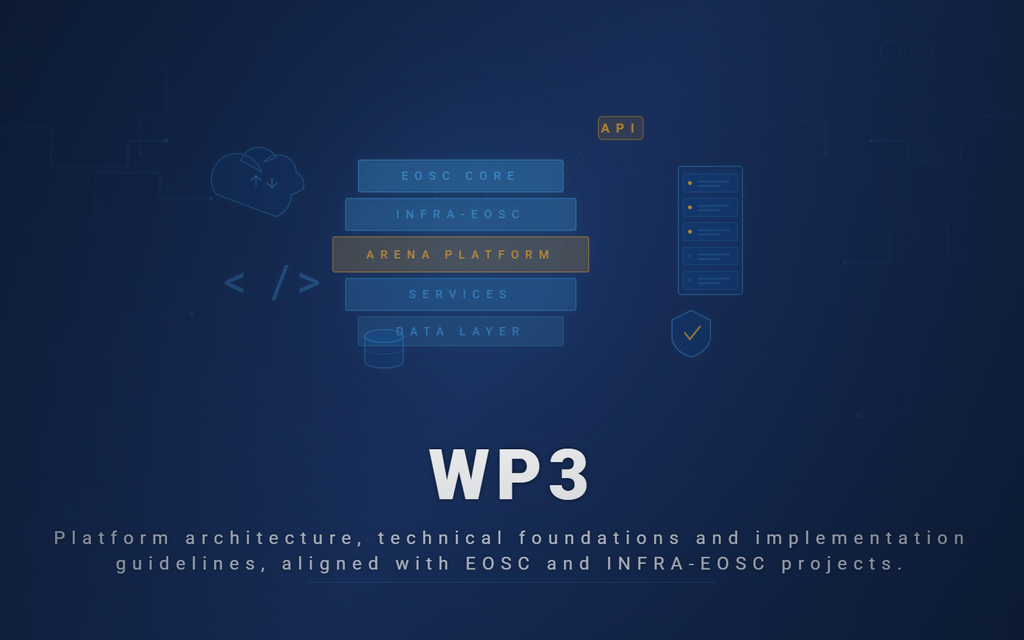
WP3 designs and validates a scalable, interoperable platform architecture built on user-driven requirements and emerging technologies, and sets out the technical foundations and implementation guidelines that support its development, adoption and long-term sustainability. In the later part of the project, WP3 refines those requirements, extends piloting to validate selected solutions in real scientific use cases, and keeps the architecture aligned with EOSC and INFRA-EOSC projects, ensuring integration with the wider European Open Science ecosystem.
Deliverable preparation in progress – check back soon!
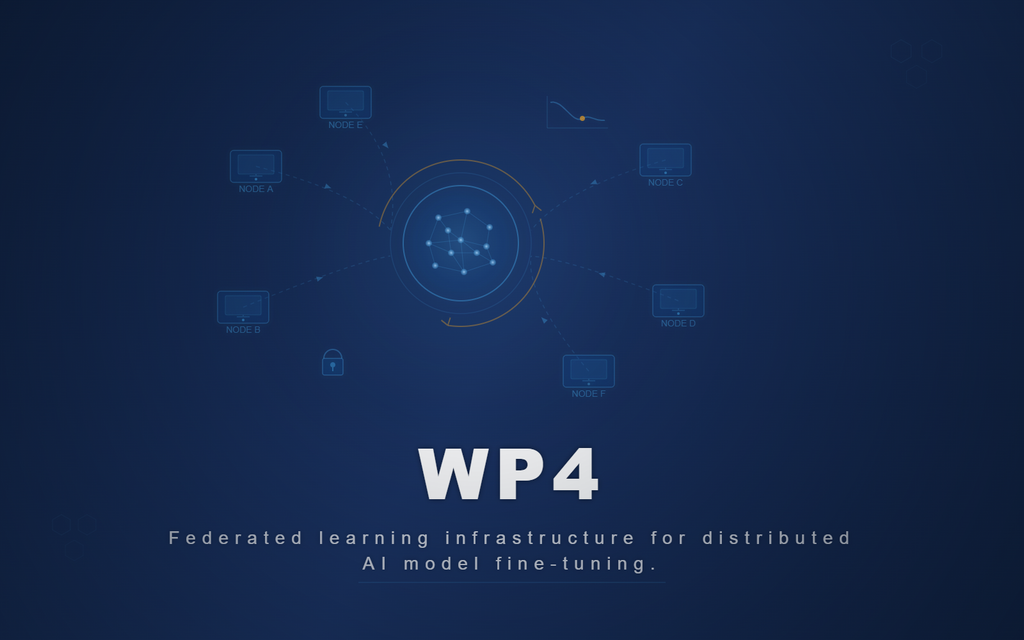
WP4 designs and implements the federated learning software layer, the infrastructure through which AI models can be fine-tuned across a distributed network of compute nodes. The system is built around three principles: platform agnosticism, so any compute node can participate regardless of location or configuration; framework agnosticism, so researchers can submit workloads using the ML toolkit that best fits their needs (PyTorch, XGBoost and others); and data-interface agnosticism, providing a common interface to each node’s data regardless of modality or storage type.
Deliverable preparation in progress – check back soon!
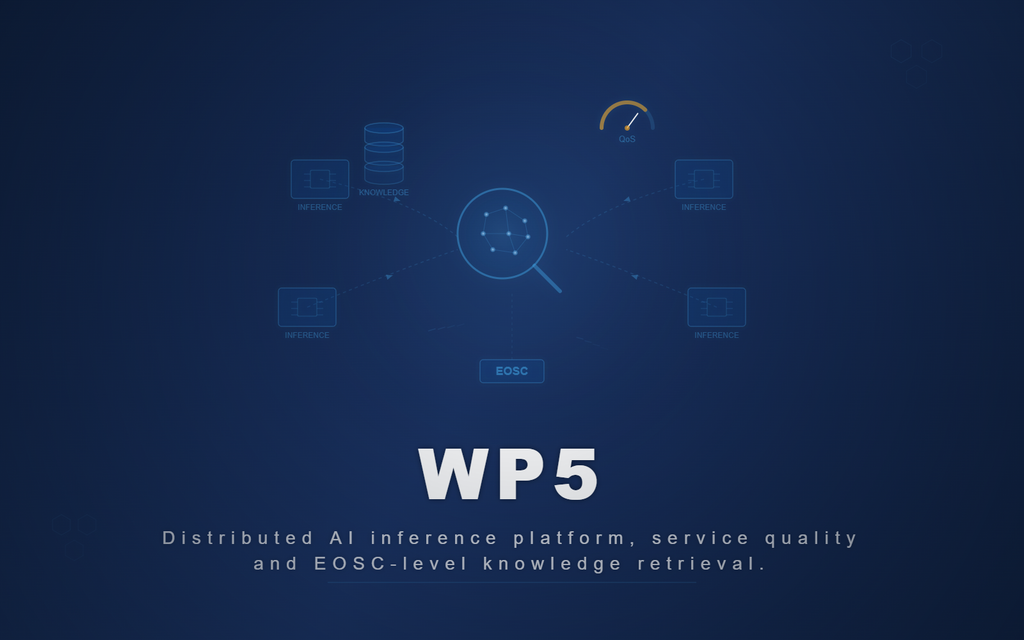
WP5 designs and implements a distributed platform for AI and GenAI model inference, built on scalable infrastructure that adapts to variable workloads across heterogeneous computing environments including CPUs and GPUs. The work package focuses on the quality of model serving – managing Service Level Agreements, addressing observability of LLM-based inference, and ensuring compatibility between models through standardised API interfaces. WP5 also develops an intelligent knowledge retrieval system at the EOSC level, using approaches such as Retrieval-Augmented Generation (RAG) and the Model Context Protocol (MCP), following open science principles to guarantee transparency, data security and reliability. Integrating these retrieval systems enables LLMs and agents to ground their outputs in verifiable sources, improving trustworthiness, auditability and traceability.
Deliverable preparation in progress – check back soon!
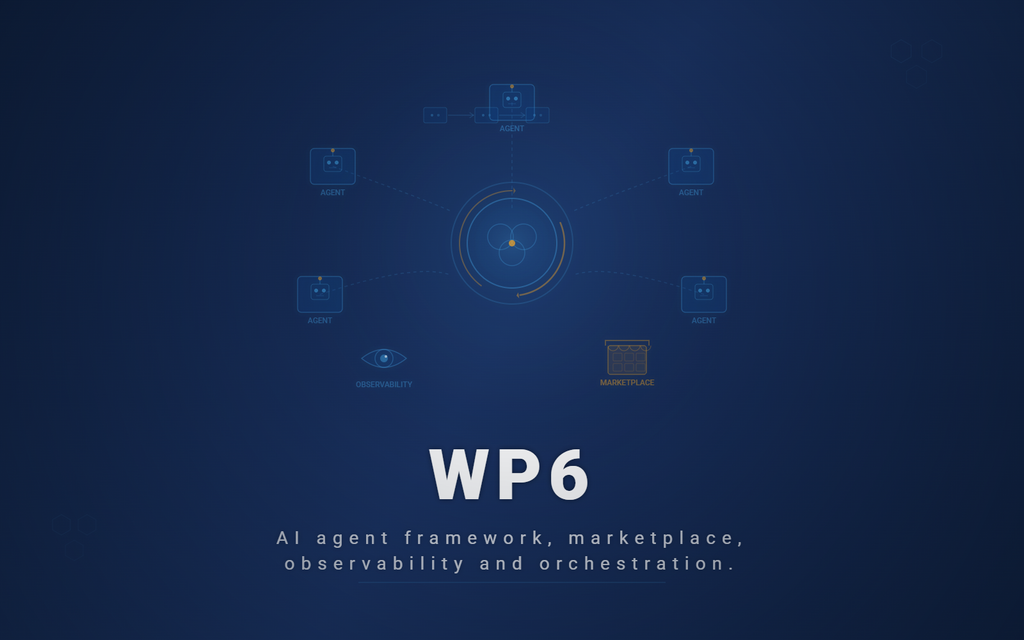
WP6 builds on the outputs of previous WPs to develop a pluggable system of AI agents running within a secure framework, connecting served GenAI models with enrichment systems. It provides an observability platform for monitoring agent behaviour and an agent marketplace where users can explore, interact with and deploy agents through a unified interface. WP6 also implements an interoperability protocol for agent-to-agent communication, enabling distributed information exchange and orchestration across agents with structured reward mechanisms. MLOps practices ensure continuous monitoring of agent systems in production.
Deliverable preparation in progress – check back soon!
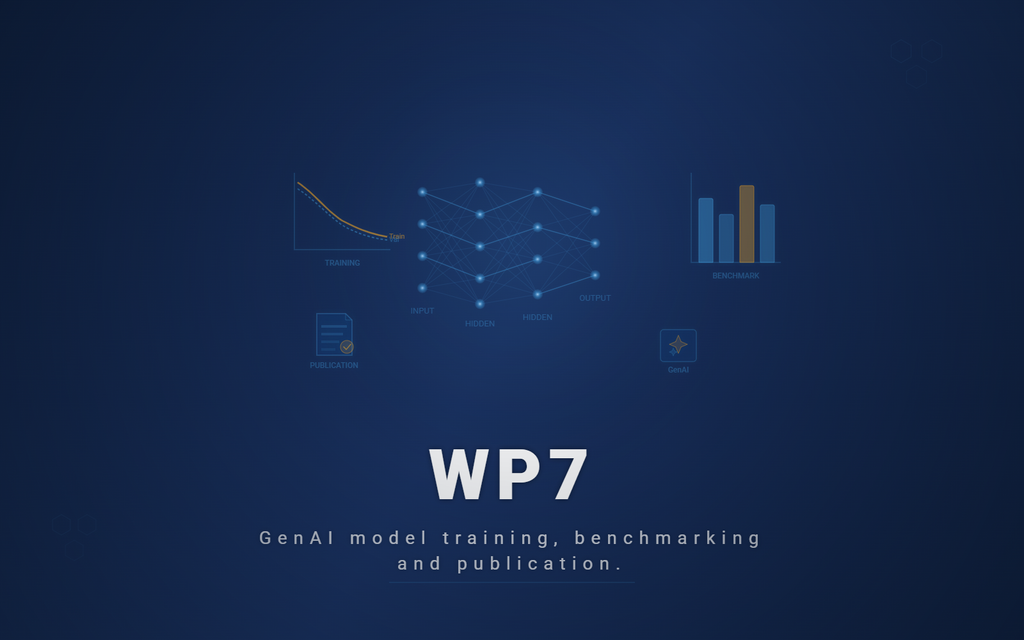
WP7 advances the training lifecycle of GenAI models for domain-specific scientific applications. This covers generating high-quality synthetic datasets to augment real scientific data, post-training and fine-tuning of models, and developing efficient small-scale models through frugal AI approaches. All trained models are benchmarked across scientific domains to ensure performance and generalisability, then containerised and published in widely used AI marketplaces for accessibility, reusability and compliance with interoperable standards.
Deliverable preparation in progress – check back soon!
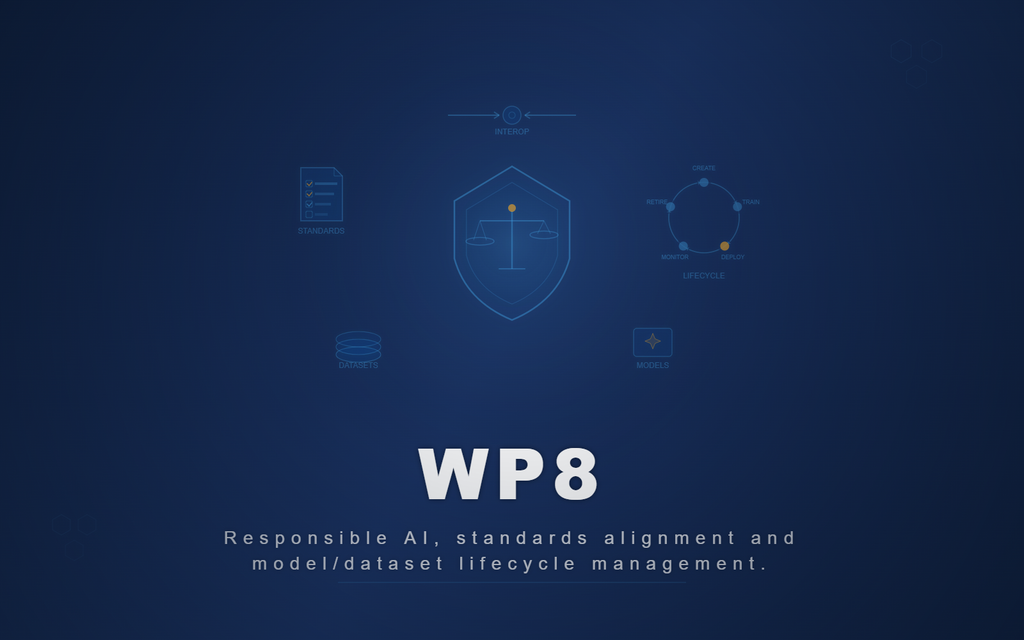
WP8 addresses the ethical, standards and lifecycle dimensions of the platform. It develops responsible-use training for researchers, aligns the platform with emerging AI standards and metadata formats for broad interoperability, with EOSC infrastructure, ESFRI registries and platforms such as Hugging Face, and establishes lifecycle tracking for models and datasets, covering provenance, PID management, automated metadata generation and research software quality practices.
Deliverable preparation in progress – check back soon!
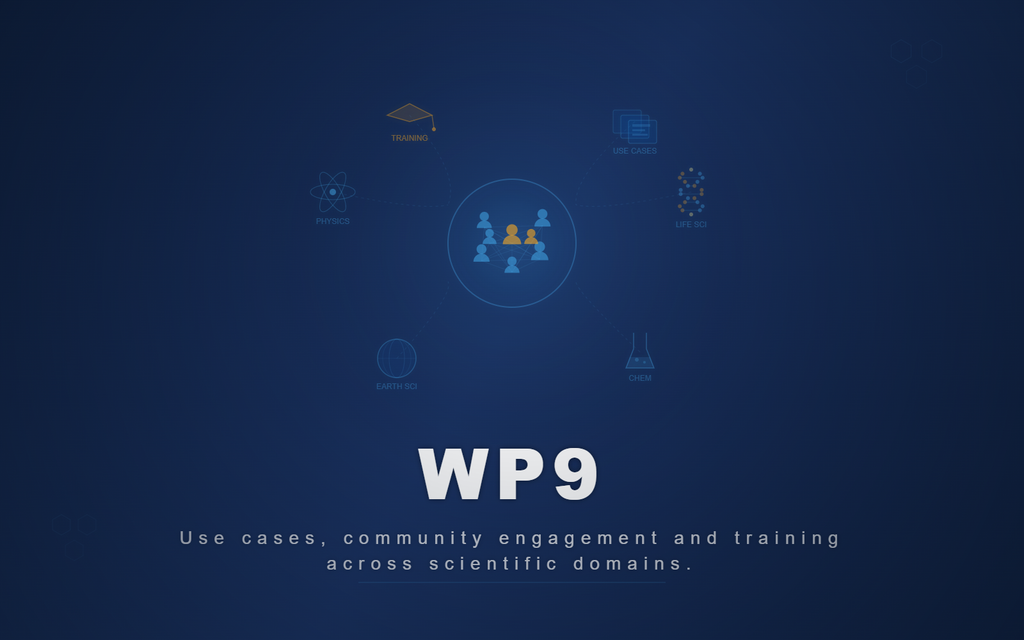
WP9 fosters co-creation and positions EOSC-ARENA within the European landscape of related initiatives. It coordinates the onboarding and development of use cases and demonstrators across medical, physical, material, social and life sciences, while exploring cross-disciplinary applications. WP9 facilitates engagement and cross-fertilisation with initiatives funded under INFRA-EOSC and GenAI4EU through joint workshops, user feedback and targeted adoption activities, and develops training curricula based on structured learning paths to support uptake of project results.
Deliverable preparation in progress – check back soon!
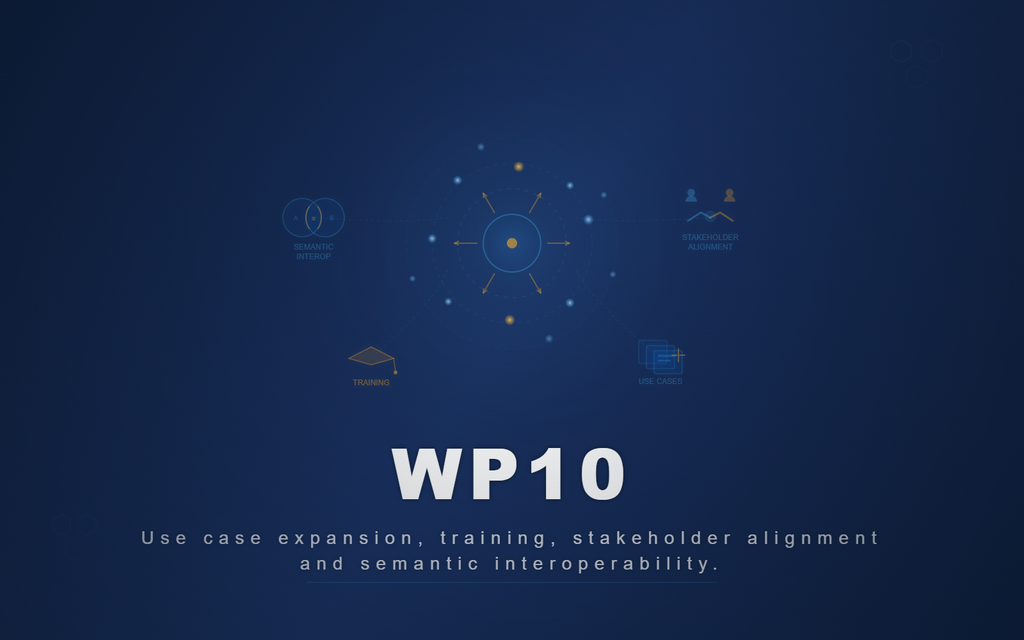
WP10 builds on WP9’s foundations as the project matures, continuing and expanding the initial use cases, onboarding new ones, and broadening the user base. It updates and improves training curricula, delivers a pilot Train-the-Trainer programme and produces final guidance and recommendations for adopting GenAI in research workflows.
WP10 advances semantic interoperability across the platform, making data and models from across the EOSC network AI-ready. Starting from a formal assessment of WP8 outputs and stakeholder feedback (including from EOSC EDEN and FIDELIS), it produces an updated semantic interoperability and standards blueprint and supports its technical implementation in coordination with technical WPs.
Deliverable preparation in progress – check back soon!